Disclosure: This post contains affiliate links. If you make a purchase through an affiliate link, StyleMyHaven may earn a commission at no extra cost to you.
Small Living Room Layout Ideas: Furniture, TV, and Walkway Clearance
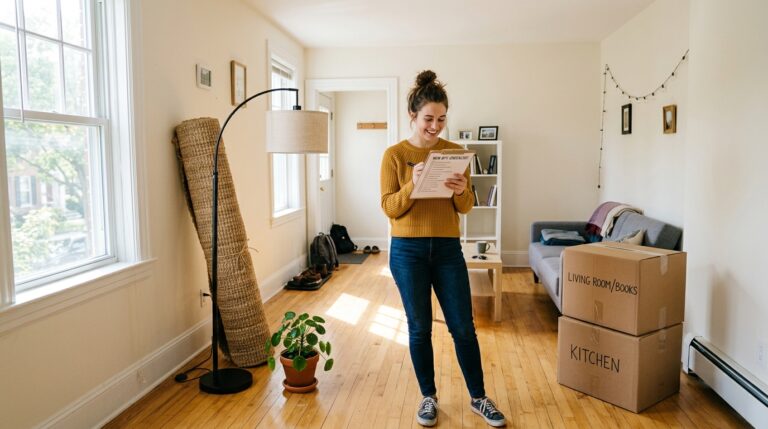
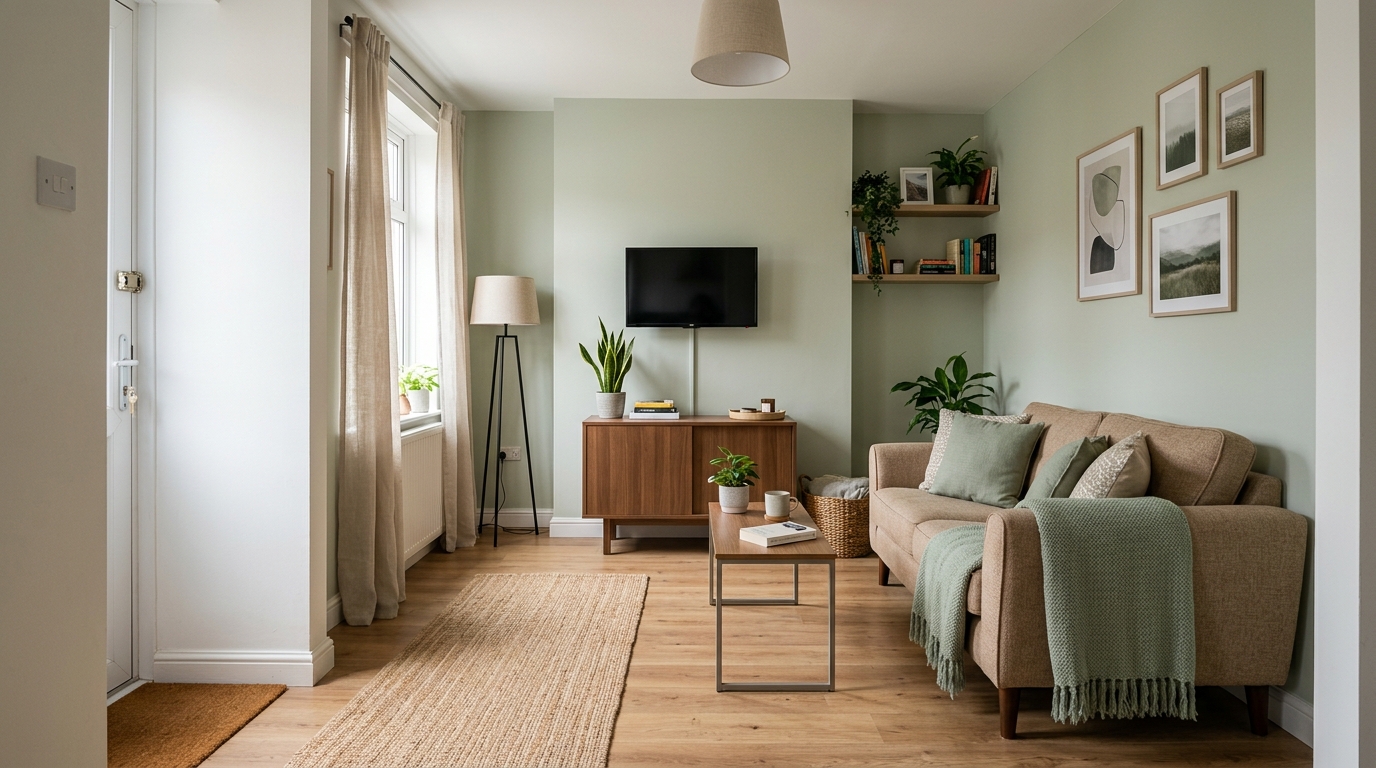
Small living room layout ideas work best when they begin with how you move through the room, not with a sofa, a cabinet, or a decorative object. A compact living room still needs to support everyday life: getting in and out, sitting comfortably, watching television, setting down a drink, storing blankets, and occasionally having another person over. The quickest way to make it feel cramped is to choose furniture one piece at a time without protecting the route through the room.
Start with movement, then decide where the sofa, TV, storage, and extra seating belong. A clear plan will usually make a room feel calmer than another decorative item will.
Small Living Room Layout Ideas Start With the Route Through the Room
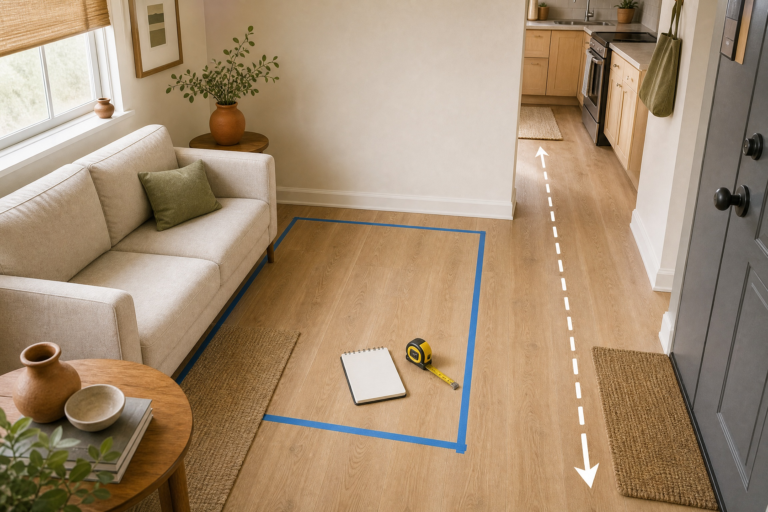
Before moving the sofa, identify the path people use most often. It may run from the apartment door to the kitchen, from the hallway to the window, or from the sofa to a balcony door. That route is not leftover floor space. It is the part of the room that allows everything else to work.
Mark the main route with painter’s tape, a rug edge, or even a row of books on the floor. Then open the room’s doors, sit on the sofa, pull out drawers, and walk through carrying a bag. This simple test reveals whether a coffee table is too deep, an accent chair blocks the exit, or a cabinet turns a comfortable route into an obstacle course.
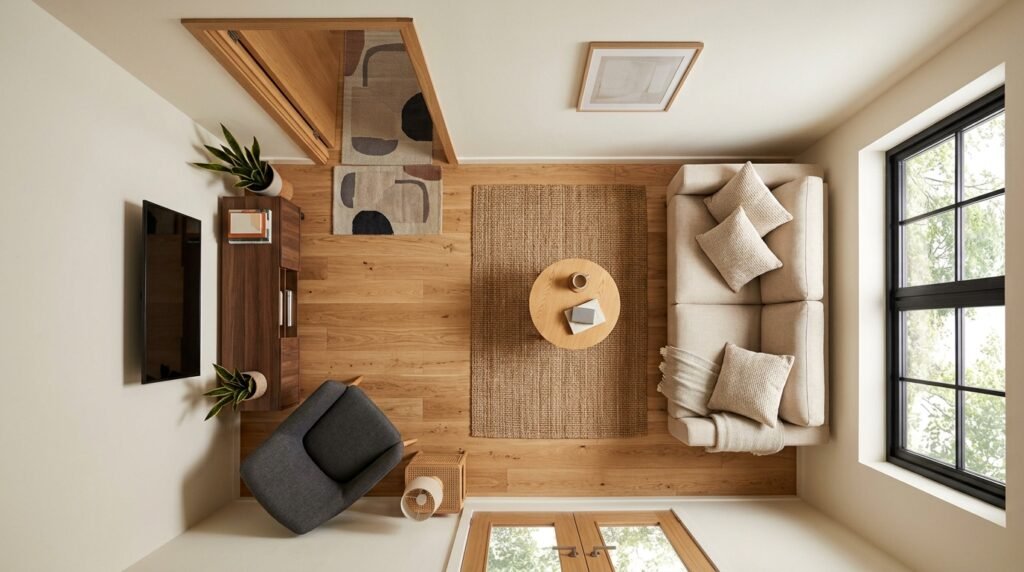
A useful layout does not require every edge of the room to be filled. It requires the main movement path to stay legible when the room is actually in use.
Choose the Sofa Before You Choose Accent Pieces
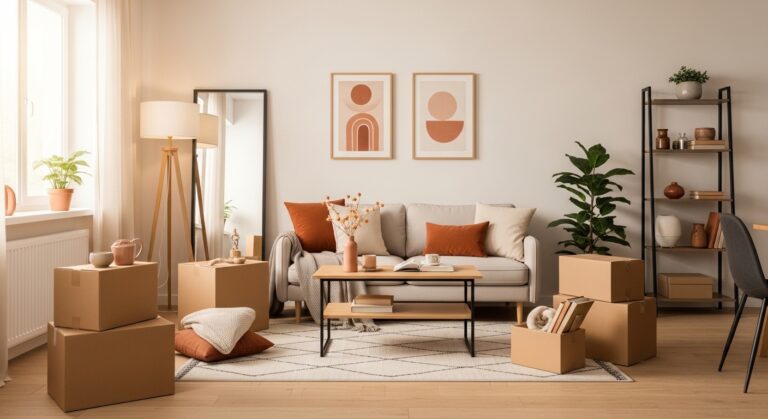
In most compact rooms, the sofa controls the layout. Choose its position and footprint before adding an armchair, ottoman, side table, or extra storage. These small living room layout ideas are easier to test when the largest seat is already in place.
A compact sofa does not have to sit flush against a wall. In some rooms, pulling it slightly forward creates a clearer route behind it or a more usable conversation area. In other rooms, a wall placement is the only sensible choice. The useful question is not, “What is the prettiest arrangement?” It is, “Can people use this room without repeatedly moving around furniture?”
If you are considering a sectional, pay close attention to the side from which the chaise projects. A chaise that reaches into the main route can make a room feel narrower even when the sofa technically fits. A smaller sofa with a movable ottoman or one flexible chair can be easier to adapt over time.
Small Living Room Layout Ideas for TV Placement
A television usually needs one clear wall, a comfortable viewing position, and a home for cables and accessories. It does not need to occupy the only available storage wall or force the sofa into a difficult position.
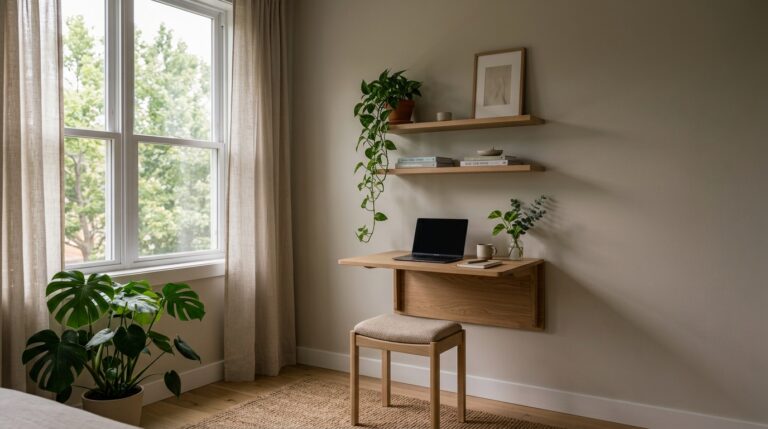
Begin with the wall that gives you the best sightline from the main seat. Then consider what the television needs around it. If that wall is also useful for closed storage, a low cabinet can contain remotes, games, media accessories, and everyday visual noise. If the room needs height, a tall narrow bookcase on a different wall may be more useful than a deep entertainment unit.
For renter-safe styling ideas after the layout is working, read Renter-Friendly Living Room Makeover: 10 Ideas Under $200. That guide is about low-commitment visual updates; this article remains focused on the furniture plan that should come first.
Use a Coffee Table Only if It Helps the Room
A coffee table is useful when it gives you a landing place for drinks, books, or a tray without interrupting the route through the room. It is not mandatory.
If the central floor area is tight, consider a smaller table, nesting tables, or an ottoman with a tray. The goal is to keep the middle of the room functional while retaining enough surface area for daily life. Test a temporary version first: place a cardboard box or painter’s tape where the table would sit, then live with it for a day or two.
Let Storage Follow the Layout, Not Lead It
Storage can improve a living room quickly, but only after you decide what the room needs to hide. Blankets, games, cables, pet supplies, children’s items, and mixed everyday objects generally benefit from closed storage. Books, plants, and a few deliberate objects can work on open shelves.
| If the room’s problem is… | Start with… | Avoid… |
| Blankets, games, and cables are visible | A low closed cabinet, storage ottoman, or lidded basket | Open shelves that display every mixed category |
| The room feels visually flat | One tall narrow bookcase or a floor lamp | Filling every wall with deep shelving |
| There is little room for a media unit | A smaller low cabinet or renter-safe TV solution | A wide entertainment centre that dominates the wall |
| The sofa area lacks a surface | A small coffee table, nesting table, or tray-topped ottoman | A table that makes the route through the room awkward |
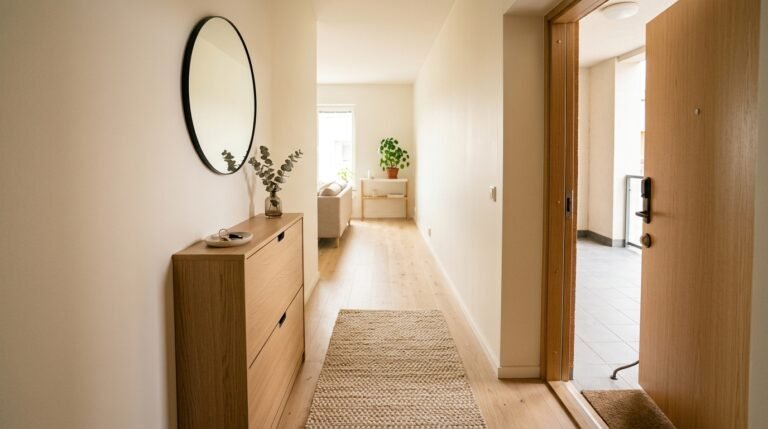
| The entry into the room feels blocked | A layout change before buying another storage piece | Adding a deep cabinet near the doorway |
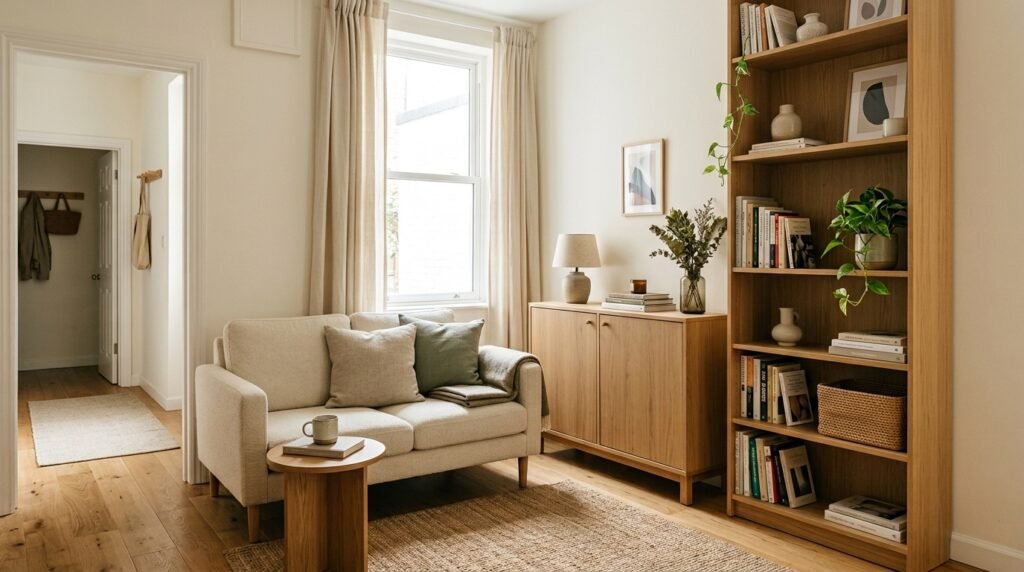
Once you know what needs to disappear, compare closed living-room storage. If the room needs height rather than more floor-level furniture, browse vertical living-room storage. These are curated category sections, so check current dimensions, materials, and product details before purchasing.
Use Light to Support the Layout
Lighting is not only about atmosphere. In a compact room, it can clarify the zones you already created. A floor lamp can make a seating corner feel intentional. A table lamp can make a low storage cabinet feel like part of the room rather than a hiding place. Curtains hung with care can draw the eye upward without asking the furniture to do all the work.
Avoid treating light as an excuse to fill every surface. One or two useful light sources usually create a calmer result than several small lamps competing for outlet space.
A Simple Small Living Room Layout Ideas Sequence
Use this order before buying or moving anything major:
- Identify the main route through the room.
- Choose the sofa wall or sofa position.
- Place the TV where it has a clear sightline without taking over the entire room.
- Test the coffee-table footprint or choose a flexible alternative.
- Decide what must be hidden and what can be displayed.
- Add only the storage that fits the remaining wall and floor space.
- Finish with lighting and textiles once the room works functionally.
For broader guidance on sightlines, vertical storage, mirrors, and visual weight, read 10 Small Space Hacks to Make Your Home Look Bigger.
Frequently Asked Questions
Where should a sofa go in a small living room?
Place it where it supports a clear route through the room and a comfortable view of the focal wall or television. The right wall depends on the door, windows, and the room’s daily traffic, not on a fixed decorating rule.
Can I use a sectional in a small living room?
Yes, if the chaise does not extend into the main walkway and the overall footprint leaves enough usable floor space. Test the full chaise depth with tape before ordering.
How do I fit storage into a small living room?
Begin by identifying what you need to hide. Choose closed storage for mixed everyday clutter and open storage only for a smaller, intentional display. Select the storage piece after the sofa and route are set.
Is a coffee table necessary in a small living room?
No. A compact table, nesting tables, or an ottoman with a tray may work better. Keep any central piece only if it gives you a useful surface without making the room harder to move through.
What is the first step in small living room layout ideas?
The first step is identifying the route through the room. Once you know where people need to walk, you can choose a sofa position, coffee-table footprint, storage location, and TV wall that do not obstruct everyday use.
Make the Room Easier to Live In First
The most useful small living room layout ideas make every item earn its place and keep the route through the room intact. Start with how you move, then place the furniture that supports the everyday routine. Storage and styling work best once the layout has already solved the practical problems.
Next step: Once you know whether the room needs concealed clutter control or more vertical capacity, browse the closed living-room storage or vertical living-room storage collections. These are affiliate collection routes; StyleMyHaven may earn a commission if you purchase through eligible links, at no extra cost to you.