Disclosure: This post contains affiliate links. If you make a purchase through an affiliate link, StyleMyHaven may earn a commission at no extra cost to you.
Small bedroom storage ideas work best when they solve a repeated clutter problem without making the room harder to move through. Clothing, chargers, books, laundry, bedding, and everyday objects can collect around the bed when they do not have clear homes—the one area that should feel easiest to rest in.
The aim is not to hide everything in matching boxes. It is to give each repeated category a simple home while preserving enough space to get in and out of bed without turning the room into an obstacle course.
Small Bedroom Storage Ideas Start by Protecting the Space Beside the Bed
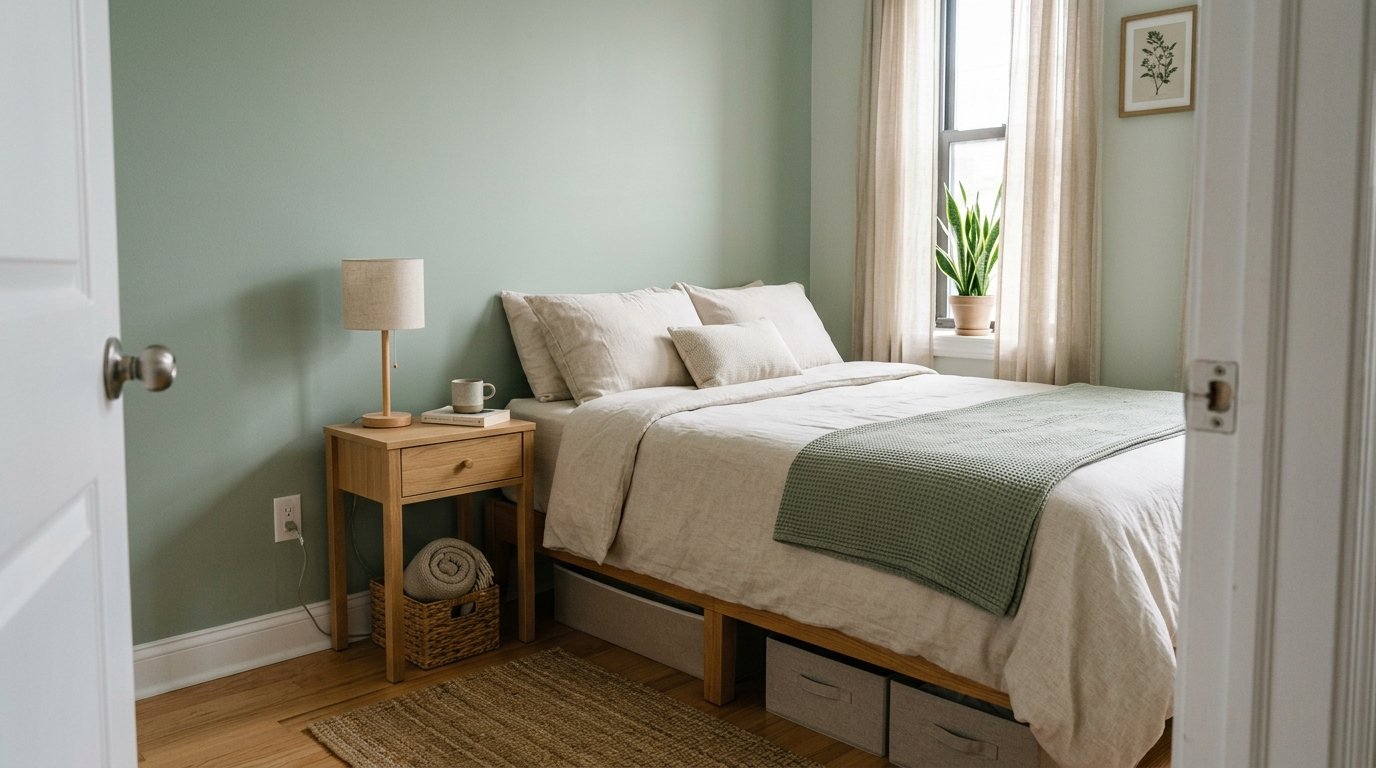
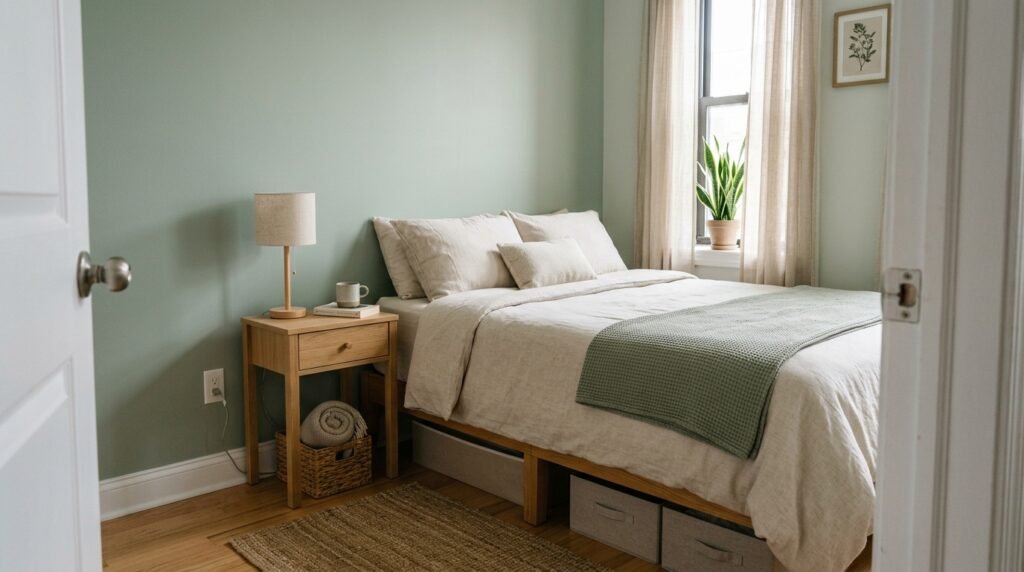
The area beside the bed is the most important storage zone in a small bedroom because you use it at the beginning and end of every day. When this area becomes a pile of charging cords, glasses, books, clothes, and water bottles, the whole room feels less calm.
Start by deciding what truly belongs within arm’s reach. For most people, it is a lamp, phone, water, one book, and perhaps glasses or medication. A slim nightstand with a drawer, a small shelf, or a simple tray can hold these items without asking the floor to do the work.
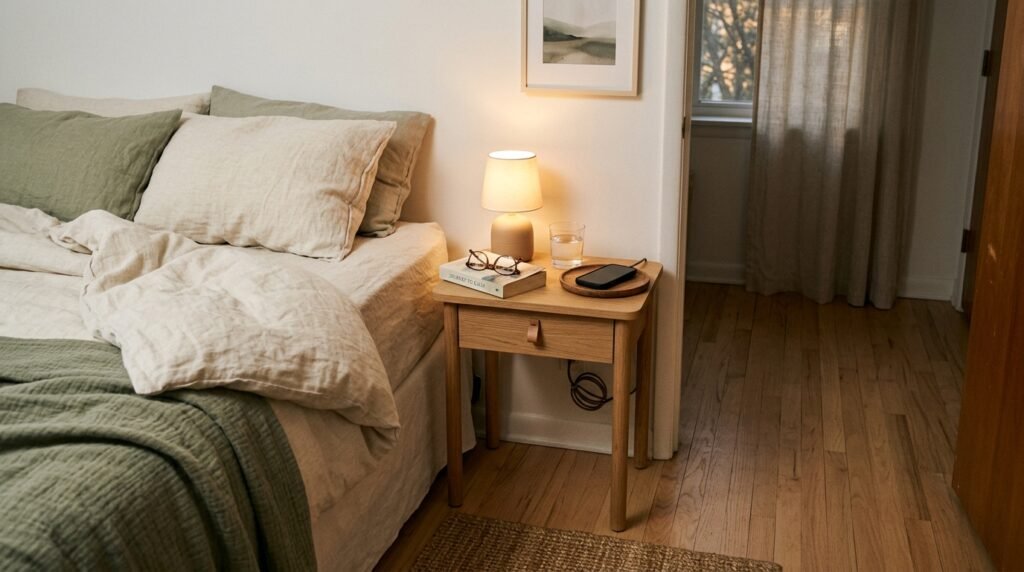
If your bedside table is too large for the room, it may be making the bedroom feel more difficult than it needs to. Measure the available width and depth, then open any drawer or door in place before buying a replacement. A smaller piece that keeps the route clear is usually more useful than a larger cabinet with unused capacity.
Small Bedroom Storage Ideas That Use the Bed Footprint First
Under-bed storage can be valuable because it uses space the bed already occupies. It is most useful for categories you do not need every day: spare linens, out-of-season clothing, luggage, or extra towels.
Choose containers that are easy to pull out and return, rather than loose bags that create dust and frustration. Keep the categories simple. One bin for guest bedding and one for seasonal clothing is easier to maintain than six small boxes with labels you stop reading.
Before adding under-bed storage, check three things: the available height under the frame, how far the container needs to pull out, and whether the bed’s legs or centre support will get in the way. If the room is too tight for a container to slide out comfortably, that storage is not truly accessible.
Make the Closet Do More of the Work
In a small bedroom, a closet works best when it is organised around your daily routine instead of around an idealised wardrobe. Keep the items you wear most often in the easiest-to-reach zone. Store off-season clothes, occasional bags, and extra linens on higher shelves or in the least convenient areas.
A second tension rod can increase hanging capacity for shorter items, such as shirts or folded trousers, without a permanent alteration. Matching hangers make a crowded rail easier to read, but they are not required for a functional system. The real improvement comes from grouping similar items and leaving enough space to see what you own.
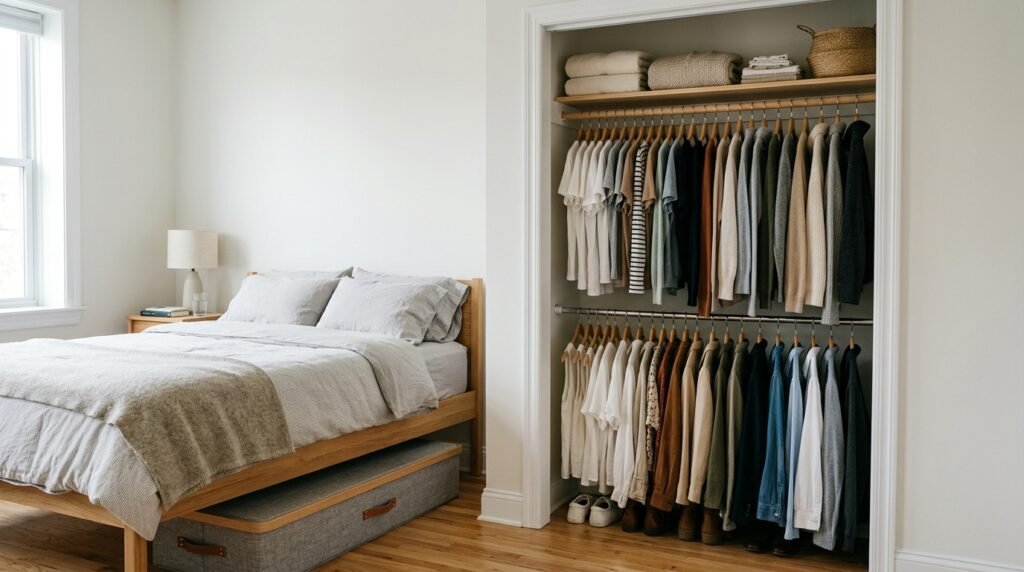
If you are considering an extra cabinet, ask whether the existing closet, bed footprint, and bedside surface have already been used well. An additional cabinet can solve a real storage problem, but it can also consume the last comfortable path around the room.
Choose Closed Storage for Visual Noise
Open storage can be attractive when it holds a small number of intentional items. It is less useful for mixed categories such as chargers, laundry supplies, skincare, extra bedding, and everyday clothing. Those categories generally look calmer behind a drawer, door, basket lid, or curtain.
These small bedroom storage ideas are easier to maintain when the solution fits the real constraint rather than promising more capacity than the room can comfortably hold.
| If your problem is… | Start with… | Check before buying |
| Nighttime clutter | A slim nightstand with a drawer or a small tray | Bedside width, drawer clearance, and cable access |
| Spare linens and seasonal clothes | Under-bed storage with easy access | Under-bed height, pull-out space, and dust protection |
| A cramped clothing rail | A second tension rod or better grouping | Closet dimensions, weight limits, and door closure |
| Laundry is always visible | A lidded hamper or contained laundry zone | Whether it fits without blocking the bedside route |
| Books and small objects spread across surfaces | A small shelf, drawer, or lidded basket | Visual weight and whether you will return items daily |
For deposit-safe ways to make the same room feel more personal, read Renter Friendly Bedroom Ideas: 10 Proven Ways to Refresh Without Painting. That guide focuses on styling and reversible upgrades; this one focuses on everyday storage and clearance.
A Calm Storage Routine Takes Less Than Ten Minutes
A useful bedroom system should be easy to restore after a normal day. Try this short reset before bed: put laundry into one contained place, return chargers and glasses to the bedside zone, place clothing for tomorrow in one location, and clear the visible floor route. You do not need to reset every drawer to make the room feel better.
The same approach is helpful in a first apartment, when you are still discovering which items you actually use. The First Apartment Essentials Checklist can help you prioritise functional basics before buying extra furniture or decor.
Add Storage Only After You Measure the Real Constraints
The most tempting mistake in a small bedroom is to buy a tall cabinet because it promises more storage, then discover it makes the room darker, blocks a drawer, or turns the route to the bed into a squeeze. Measure the width, depth, height, and clearance of the space you want to use. Then test the footprint with tape or a cardboard box before ordering.
If you are ready to compare categories after that measurement check, browse Bedroom & Bedside Storage. The collection is organised for compact bedrooms and bedside routines. Review current dimensions, materials, and delivery details on individual items before purchasing.
Frequently Asked Questions
What is the best storage for a small bedroom?
The best storage is the type that solves your repeated problem without blocking the bed or walking route. Under-bed storage is useful for occasional items, while a slim bedside piece helps with daily essentials and a better closet system helps with clothing.
How can I make a small bedroom look less cluttered?
Start with the visible categories that collect near the bed. Use closed storage for mixed items, keep only daily essentials on the bedside surface, and protect one clear floor route through the room.
Is under-bed storage a good idea?
Yes, when the containers are easy to access and you use them for items that do not need to be reached every day. Check the clearance under the frame and the space needed to pull a container out.
How can renters add closet storage without drilling?
A tension rod, contained shelf categories, and better use of upper closet space can add capacity without permanent changes. Check your lease and the product instructions before installing any storage system.
Make the Bedside Area Work First
A calm bedroom does not require a large room or a perfect minimalism routine. It needs clear priorities: a usable bedside area, accessible clothing storage, a home for extra linens, and a pathway that is easy to move through. Solve one repeated clutter problem at a time and the room will begin to feel less busy.
Next step: After you measure the space around your bed and closet, browse Bedroom & Bedside Storage for curated category ideas. This is an affiliate collection; StyleMyHaven may earn a commission if you purchase through eligible links, at no extra cost to you.