(+ Space-Saving Furniture Picks!)
Disclosure: This post contains affiliate links. We earn a small commission if you purchase through these links (at no extra cost to you).
If you are wondering how to make a small space look bigger, start with the way light, sightlines, color, furniture, and storage work together. You do not always need a renovation or a larger home. A few intentional changes-such as clearing a visual path, reflecting daylight, choosing lighter connected tones, and using storage that fits the room—can make a compact apartment or small room feel calmer and more open.
The Small Space Struggle is Real
Clutter piling up? Rooms feeling cramped? You’re not alone. As a small-space dweller myself, I’ve tested every trick in the book to make my apartment feel open and airy.
You don’t need a renovation to maximize a small space! These DIY-friendly hacks use clever tricks and affordable storage solutions (like the Cas Shoe Cabinet) to make your home feel bigger—no contractor required.
Learning how to make a small space look bigger is less about one dramatic trick and more about combining light, sightlines, furniture scale, and calm storage. The 10 practical ideas below help you do that without a renovation.
1. The Vertical Vision Trick
Works because: Empty wall space is wasted space.
- Install floating shelves up to the ceiling
- Use tall bookcases
- Hang plants at different heights
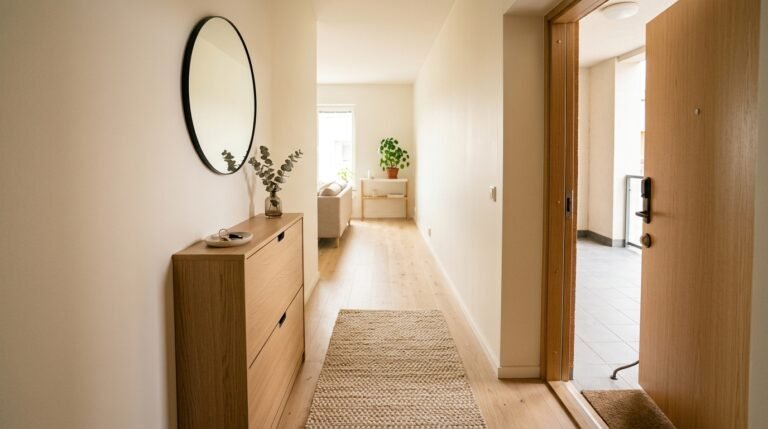
My pick: The Cas Shoe Cabinet (44.9″ tall) fits snug in entryways while storing 12+ pairs vertically.
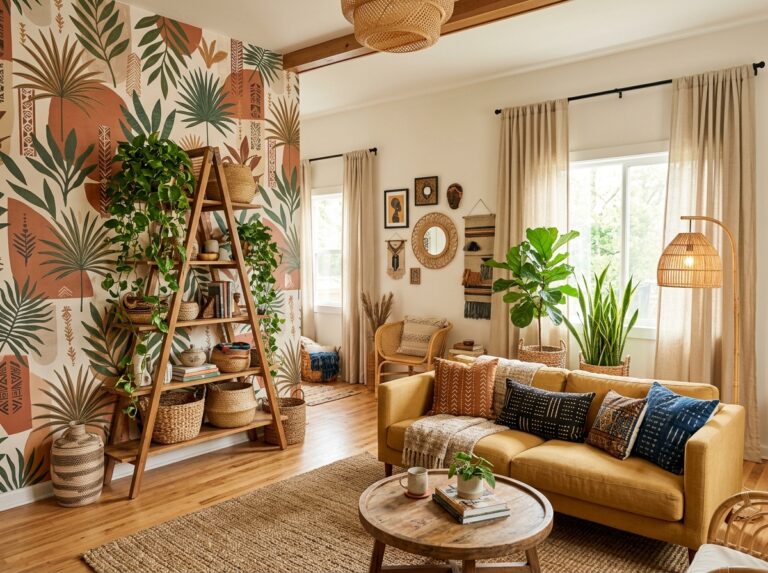
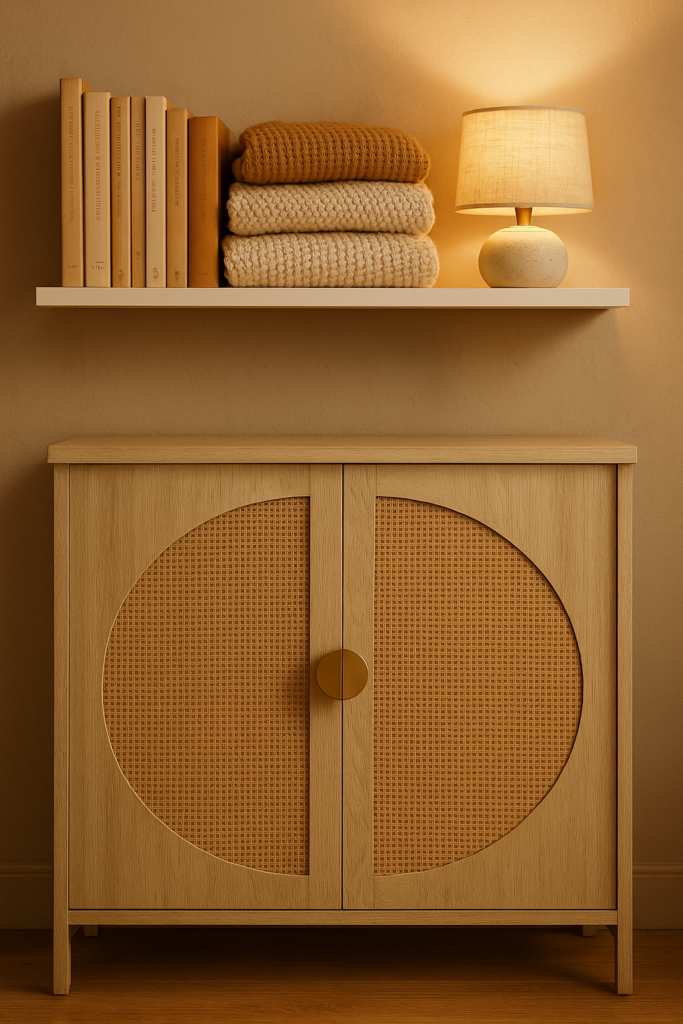
My pick: The Accent Wood Storage Cabinet (31.5″W x 15.75″D x 32.3″H) combines boho charm with smart storage—perfect for stashing blankets, books, or pantry overflow while adding rustic texture to your walls. Check out similar wood storage cabinet.
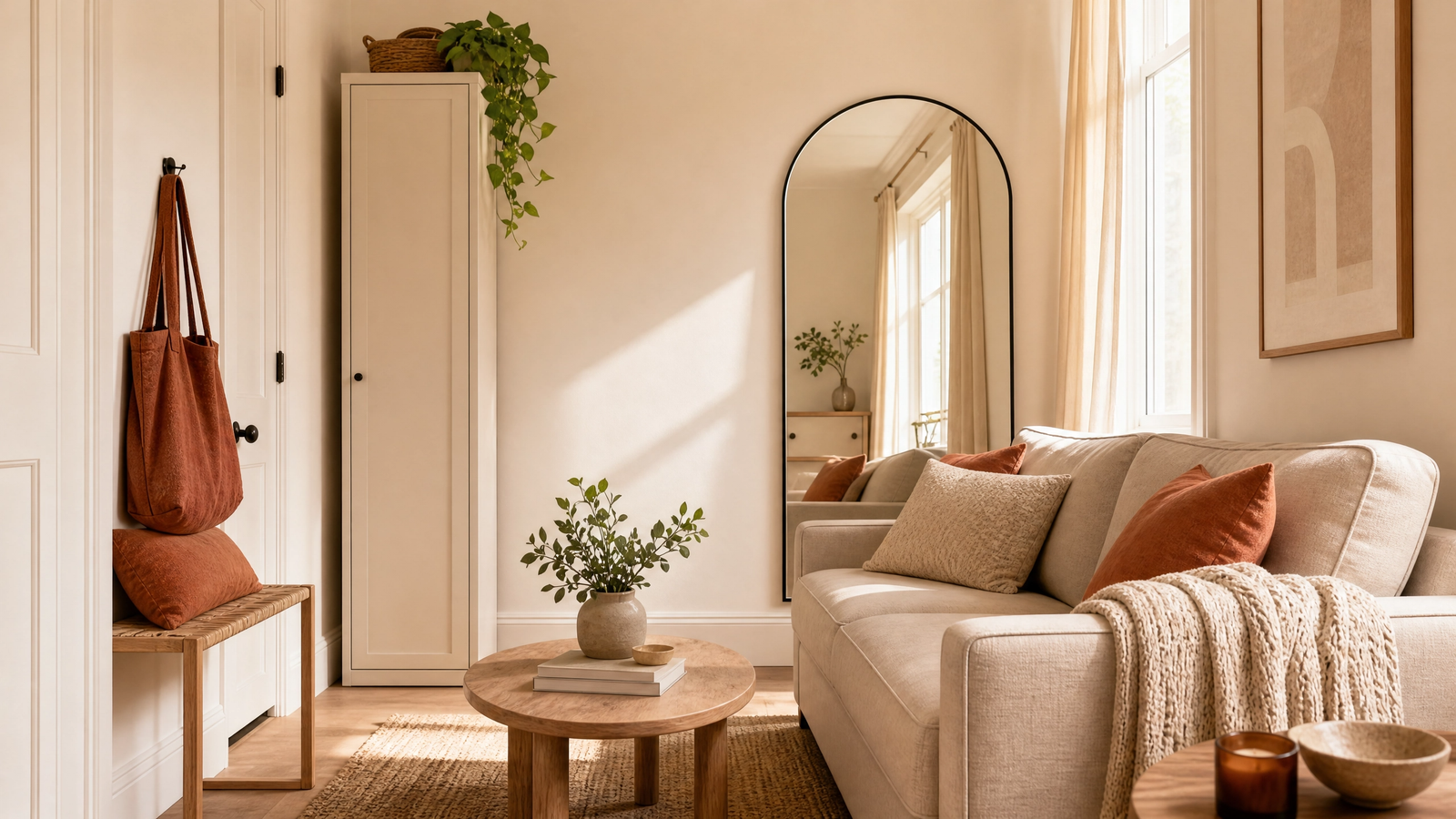
2. Mirror, Mirror on the Wall
Works because: Reflections = instant square footage.
- Place a large leaning mirror opposite windows
- Try mirrored closet doors
- Cluster small round mirrors as art
Pro tip: Antique mirrors add character without feeling clinical.
3. Furniture That Pulls Double Duty
Works because: Less pieces = more breathing room.
- Storage ottomans (hide throw blankets)
- Nesting side tables (tuck away when not needed)
- Sofa beds for guest-ready spaces
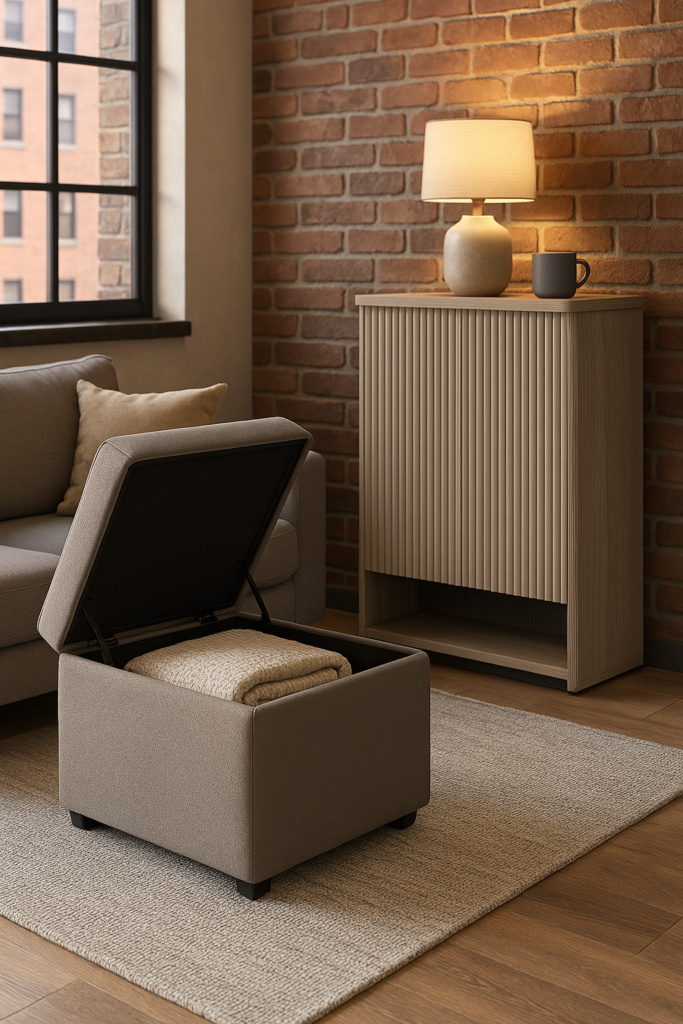
Star player: The Cas Shoe Cabinet (44.9″ tall x 14.6″ deep) shines as:
✓ Sleek nightstand – Top holds a lamp + coffee mug; drawers hide chargers/books.
✓ Entryway command center – Store keys in the top drawer, shoes below.
✓ Pet supply station – Leashes in the drawer, treats on the shelf.
✓ Bathroom storage – Towels rolled inside, toiletries on top.
Styling tip: Add a small tray on top to corral mugs/keys and elevate the look.
4. The Color Expansion Effect
Works because: Light hues make walls recede.
- Paint walls Swiss Coffee by Benjamin Moore
- Use monochromatic schemes (variations of one color)
- Add pops of color with removable decor
Avoid: Dark accent walls in tiny rooms.
5. The Hidden Storage Revolution
Works because: Visible clutter shrinks spaces.
- Under-bed bins on wheels
- Window seat storage
- Over-the-door organizers
Clever solution: The Cas Shoe Cabinet’s pop-up doors conceal mess while adding texture.
6. Fold It All Away
Works because: Flexibility = freedom.
- Wall-mounted drop-leaf tables
- Folding chairs behind doors
- Retractable clotheslines
7. Ghost Furniture Illusion
Works because: See-through = invisible bulk.
- Acrylic chairs (like Louis Ghost style)
- Glass coffee tables
- Lucite shelves
8. Light Layering Magic
Works because: Shadows make rooms feel cave-like.
- Plug-in wall sconces (no hardwiring)
- LED strip lights under cabinets
- Arc floor lamps to draw eyes up
9. The Sliding Door Solution
Works because: No door swing = 5+ sqft saved.
- Barn doors for closets
- Pocket doors between rooms
- Curtain dividers for studios
10. Stripes That Stretch Space
Works because: Lines guide the eye.
- Vertical striped wallpaper
- Area rugs with lengthwise patterns
- Floor-to-ceiling curtains
Choose Storage By The Problem You Are Trying To Solve
The best storage piece is not always the largest one. Start with the problem: bedside clutter usually needs a compact nightstand with a drawer; shoes and bags near the door need vertical entryway storage; books and decor need height rather than extra floor width; and blankets, dishes, or living-room overflow usually need a closed cabinet or sideboard. Choose the piece that solves the specific problem while fitting the available width, depth, and walking space.
| If your problem is… | Consider… | Continue reading |
| Chargers, glasses, and bedtime items are scattered | A compact nightstand with a drawer or open shelf | Minimalist nightstand guide |
| Shoes and bags collect near the entrance | A narrow vertical shoe cabinet | Entryway storage ideas |
| A small living room lacks display and storage space | A tall bookcase with a few closed compartments | Tall bookshelf guide |
| Clutter is visible in the living or dining room | A sideboard, buffet, or closed storage cabinet | Buffet cabinet guide |
Storage works best when it solves a specific problem rather than simply adding another piece of furniture. Before choosing a cabinet, shelf, basket, or cart, identify what is making the room feel crowded. Is it visible clutter, a blocked walkway, a lack of vertical space, or everyday items that do not have a home? Use the guide below to match the storage type to the problem.
How to Make a Small Space Look Bigger: Choose Storage Carefully
Storage can either make a small room feel more organized or make it feel heavier. Before buying a cabinet, shelf, or basket, check the available width, depth, height, door clearance, and walking space. The best choice is the one that solves a repeated problem without blocking light, movement, or the room’s main sightline.
| If your main problem is… | Start by considering… | Check before buying |
| Shoes, bags, and keys collect near the door | A slim shoe cabinet, narrow console, wall hooks, or a small entryway basket | Entryway width, walking clearance, shoe capacity, ventilation, and usable top surface |
| Books and objects are spread across the living room | A tall bookshelf, ladder shelf, or closed storage cabinet | Overall height, shelf depth, wall clearance, stability, and whether some sections can hide clutter |
| Cables, chargers, and bedside items are visible | A nightstand with a drawer, a small bedside tray, or a cable-management box | Drawer opening clearance, cable access, storage depth, and available bedside width |
| Blankets, toys, or everyday items are always visible | A closed sideboard, buffet cabinet, storage bench, or lidded basket | Door and drawer clearance, internal capacity, room scale, and ease of daily access |
| The kitchen has little counter or pantry space | A slim rolling cart, shelf riser, hanging organizer, or narrow cabinet | Counter width, wheel clearance, heat and moisture exposure, and whether the item can be moved |
| A studio or small room needs several functions | Furniture that serves two purposes, such as a storage ottoman, sofa bed, or desk with drawers | Fold-out clearance, daily usability, visual weight, and whether the furniture blocks a sightline |
| The room feels crowded even after decluttering | A layout change before buying more storage | Walkways, furniture scale, window access, and whether the new item reduces or increases visual weight |
Simple rule: Measure the available width, depth, height, clearance, and storage capacity before clicking “buy.” A beautiful storage piece is not useful if doors cannot open, walkways become narrow, or the item has less usable capacity than expected.
Room-by-Room Small-Space Storage Guide
How to make a small space look bigger depends on the room and the problem in front of you. A blocked living-room route, visible bedroom clutter, a narrow entry, and a pantry-less kitchen each need a different practical response.
Living Room: Hide the Visual Noise First
In a small living room, the goal is not to fill every empty wall with shelves. Start by deciding which items need to remain visible and which ones make the room feel visually busy. Use closed storage for blankets, games, electronics, and miscellaneous items, then reserve open shelves for a small number of books, plants, or decorative pieces.
A tall bookshelf can use vertical space without taking up much floor area, while a sideboard or buffet can provide concealed storage along one wall. Keep the main walking route visible and avoid placing a deep cabinet where it interrupts the path between the sofa, door, and window.
For more detail, read Tall Bookshelves for Living Rooms and Multifunctional Buffet Cabinets: Smart Storage Solutions. You can also compare closed living-room storage and vertical living-room storage in the curated collection.
Bedroom: Protect the Calm Feeling
Bedroom storage should reduce visual noise rather than create another crowded surface. A compact nightstand with one drawer can hold smaller essentials, while baskets or under-bed storage can contain soft goods that do not need to remain visible.
Leave enough opening clearance for drawers and doors, and avoid choosing a bedside piece that is too deep for the walking space beside the bed. If the nightstand is mainly for a lamp, book, phone, and glass of water, a smaller piece may work better than a large cabinet that dominates the room.
For related guidance, read Minimalist Nightstands for Modern Bedrooms and How to Style a Nightstand. You can also browse bedroom and bedside storage options selected for compact bedrooms and calmer bedside routines.
Entryway: Choose for the Width You Actually Have
Entryway storage has to work within the narrowest part of the passage. Before choosing a shoe cabinet or console, measure the available width and depth, then check whether doors, drawers, or baskets can open without blocking the main route.
A slim closed cabinet can make shoes and bags less visible, while hooks or a small tray can create a practical drop zone for keys and everyday items. If the entryway is very narrow, prioritize shallow storage and a clear walking path over maximum capacity.
Use the measurements and clearance checks in the decision table above before choosing a piece, then compare narrow entryway storage options, including slim shoe cabinets, compact consoles, entry benches, and coat racks.
Studio Apartment: Make Storage Support the Zones
In a studio apartment, every piece of furniture affects more than one area. Use a bookshelf, open console, rug, lighting, or storage cabinet to define the living, sleeping, dining, and work zones without blocking natural light.
Choose pieces that provide useful storage while keeping the sightline open. A tall but visually light shelf may separate zones without making the apartment feel divided, while a closed cabinet can hide items that would otherwise make the room look busy.
Combine the vertical-storage, clear-walkway, and multi-use-furniture principles in this article, then browse studio and renter-friendly storage pieces for furniture that can support more than one function without relying on permanent changes.
Small Kitchen: Solve the Missing-Pantry Problem
When a small kitchen has little or no pantry space, start with the items that are used most often. A slim rolling cart can add flexible storage, while shelf risers, baskets, and a small freestanding cabinet can improve capacity without requiring a remodel.
Keep the main preparation area clear and check whether a cart or cabinet will interfere with appliance doors, drawers, or walking space. Storage should make cooking easier, not simply move clutter from one surface to another.
Measure the available area and choose only pieces that preserve counter access and movement. For product ideas, browse small-kitchen and no-pantry solutions, including carts, buffet cabinets, utility storage, and compact kitchen shelving.
Storage Collection Notice
Small-Space Storage Recommendations
The best small-space product is not necessarily the largest or most attractive item. It is the piece that fits the available space, solves a repeated problem, and does not create a new obstruction.
The Small-Space Storage That Looks Calm collection is organized by room and use case, including narrow entryways, closed living-room storage, vertical storage, bedrooms, small kitchens, studios, and renter-friendly pieces. Use the decision table above first, then compare the relevant section before shopping.
BONUS: The Edit Your Stuff Challenge
Every 3 months:
- Take everything out of a closet/zone
- Only return what you love or use
- Donate the rest
You’ll instantly gain 10% more space!
A Practical Place to Start: Two Small-Space Storage Options
If you do not want to compare every storage option at once, start with the problem that is most visible in your home. These examples show how to evaluate a piece by footprint, storage function, and visual style rather than choosing only because it looks attractive.
For a narrow entryway: a slim shoe cabinet
The Cas shoe cabinet is a practical starting point when shoes are taking over the entrance and floor depth is limited. Its approximately 14.6-inch depth makes it worth considering for a tighter passage, but measure your own entryway carefully and confirm door clearance before buying. Check whether the cabinet can hold the type and number of shoes your household actually uses, and whether ventilation is adequate for the footwear you plan to store.
Browse narrow entryway storage options for comparable shoe cabinets, compact consoles, benches, and coat racks.
For a warmer living-room look: a wood or rattan cabinet
A similar wood-toned or rattan cabinet can work as a flexible living-room storage piece because it can hold blankets, games, media accessories, or everyday items while contributing to the room’s style. Think of it as a storage cabinet that also acts as a visual anchor: choose the finish, width, and door style to suit the room rather than assuming that every cabinet will work in every layout.
Before buying, measure the wall, check door and drawer clearance, and decide whether you need closed storage or open display space. Compare closed living-room storage and studio and renter-friendly pieces for alternatives.
Closing: Make One Calm Improvement First
If you are working out how to make a small space look bigger, start by giving each item a clear role. Start with the problem that is making the room feel crowded, measure before buying, and improve one sightline or storage zone at a time. You do not need to solve the entire home in one weekend; one clearer surface, one open walkway, or one well-chosen storage piece can make the room feel noticeably calmer.
For additional product ideas, start with the small-space storage collection and open the room-specific section that matches the problem you are trying to solve.
### 📌 Pin This for Later! *”10 Small Space Hacks That Actually Work!”* 1️⃣ Go vertical 2️⃣ Mirror magic 3️⃣ 2-in-1 furniture 4️⃣ Light colors 5️⃣ Hidden storage 6️⃣ Foldable pieces 7️⃣ See-through furniture 8️⃣ Layered lighting 9️⃣ Sliding doors 🔟 Optical illusions **Save this list to your Pinterest boards!** #SmallSpaceSolutions #ApartmentHacks #HomeDecor